Saying Goodbye to the OG Underdog Part 2
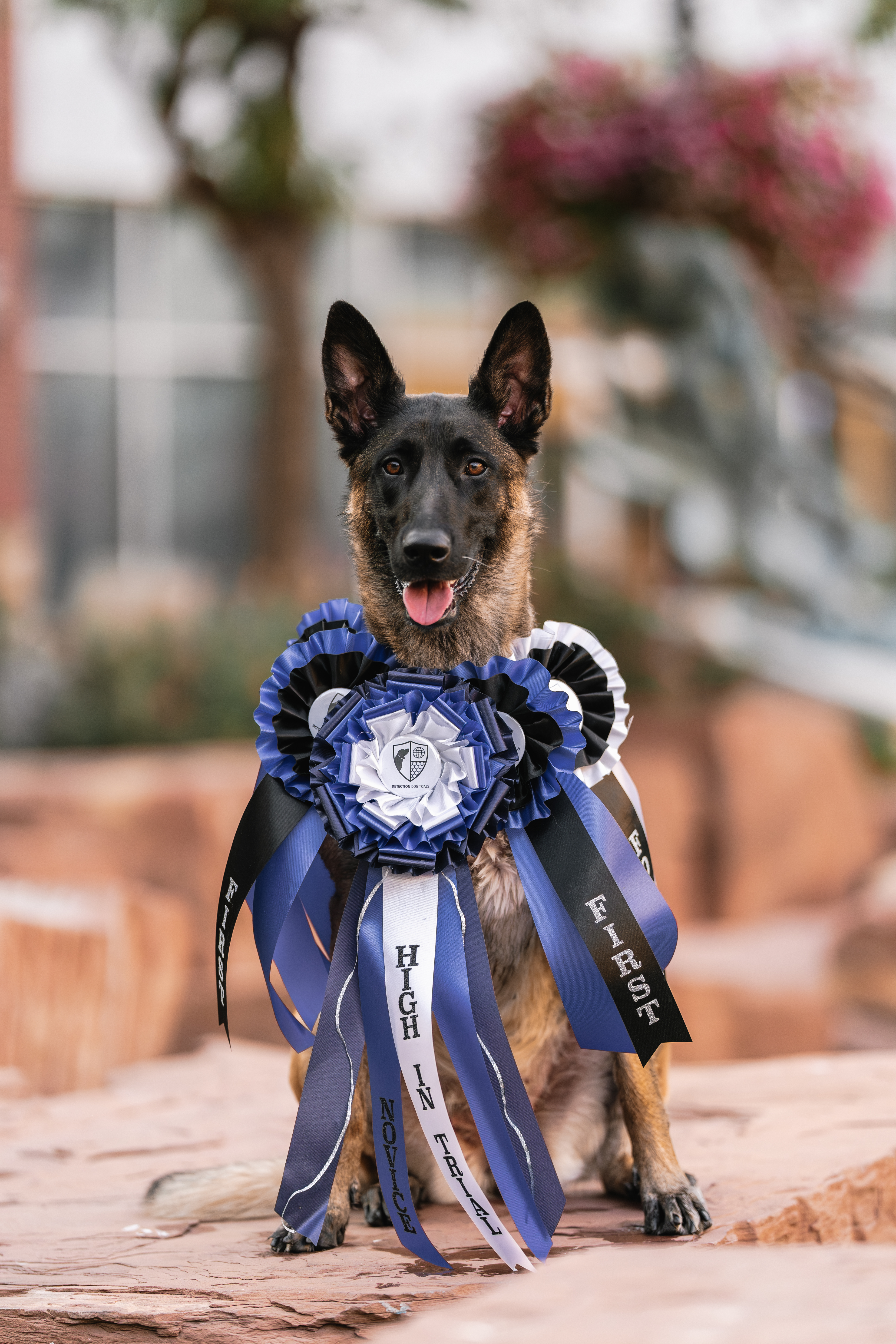
Inja's death was not a surprise. I guess as far as deaths go (you know, the dark, shitty, very depressing, eternal, permanent death we all face), the unsurprising deaths are the "best" of the options.
Just a couple weeks ago I texted my sisters, "If I die before you, please, dear god, TELL PEOPLE WHY I DIED." I sent this message shortly after reading the obituary of a high school friend. I am old, but not absurdly old; anyone dying at my age has left the world too early. If I'm dead, tell people whatever they want to know. Give them the tea!
I think the more natural reason for our curiosity of death is to learn. For Inja's death specifically: What lead me to this decision? What were the signs? How did I know it was time? What would I do differently?
If you just want the first part — your curiosity satiated — the answer is I euthanized her after several years of increasing medical issues.
If you want the second part — all the details — read on, my friend.
This is a single place where all your FAQs live. At the end I share how I'll do my best to avoid this in the future.
For Now, We'll Cover Inja's Health Decline

2014 / 1 Year Old
I suppose there is no better place to start than the beginning.
From the very first day, Inja displayed high anxiety, destruction tendencies, and overall behavioral instability.
This can be avoided in the future by choosing a dog more intentionally.


2016 / 1.5 Years Old
Inja fell from the first story of a parking garage. This is an actual photo of the location — about 30 feet straight onto concrete.
Her X-Rays showed clear (somehow not a single broken bone or injured organ), but that wrist sustained a lifelong injury nonetheless.

2017 – 2019 / 3 – 5 Years Old
Apart from normal vet visits Inja remained healthy and manageable.
Our rigorous exercise and training schedule stifled her anxiety. Behavioral issues dropped almost to zero.

2020 / 6 Years Old
Inja started showing uncharacteristic fatigue and urinary incontinence. This was a result of being spayed too early.
Treatment: weekly estrogen pill.
Symptoms mostly resolve.

2021 / 6.5 Years Old
Inja's previously injured wrist developed into a limp. It showed most prominantly after long days or intense exercise. We had to reduce movement; in turn Inja's anxiety resurfaced — but it was small and manageable.
Treatment: Carprofen as needed. Glucosamine supplement
Symptoms are treatment only, they are never fully resolved.

2021 / 7 Years Old
Inja started showing confusion in low light. I took her to the vet and she was diagnosed with Lenticular Sclerosis (age-related vision loss)
Treatment: none available
I started teaching her directional cues: left, right, up, curb, shift, under, for when her vision inevitably disappears.

2022 / 8 Years Old
Arthritis worsened. It was most noticeable in that same right front paw but could now be seen in her whole body, especially in the morning.
Treatment: more rest & more Carprofen. Mandatory rest increased her anxiety significantly. She returned to some of her anxious habits, like tearing stuff up.
Symptoms worsened consistently over time, they never improved.

2024 / 10 Years Old
Inja's arthritis is severe.
Treatment: Adequan Injection 1x month
Symptoms improve, but don't fully resolve

2024 / 10 Years Old
Teeth cleaning revealed genetic tooth resorption.
Treatment: None available, can only pull the most problematic teeth. Pulling teeth requires anesthesia; anesthesia becomes more and more dangerous in aging animals.
At this point I had started making a list of "no-go's." i.e. things I won't ask her to live through. I believe death is a gift. Of course, I'm not here to discuss the ethics of human death including such complicated things as suicide, which are far too intense for my comprehension.
I am only qualified on the topic of dog death (and I suppose even those qualifications are negotiable). In this case, death is only a gift when living has become too great a task. Left alone, nature rarely offers merciful deaths. Animals in the wild often suffer the most horrifying last moments, of which the kindest and swiftest version is being mauled by a larger, stronger predator — that's the kindest version.
I am of the opinion that our domestic animals should benefit from limited suffering in death, even though that means their deaths are rarely "natural." Natural is not always better.
My first step was to start drawing lines: what treatments I will and won't do, stress limits, cost limits, how much stress I believe she can tolerate, and how much stress I can manage.
I recommend everyone having a running list of these things for each of their pets.

2025 / 11 Years Old
Inja had become uncharacteristically aggressive. Mostly towards dogs but sometimes towards people. Always at night — I had seen this before — it was the first sign of Canine Cognitive Dysfunction.
Treatment: Fish oil (which didn't help much) and gabapentin. The gaba did work, but sometimes seemed only to work via sedating her. I often wondered if this was unkind, though it also helped treat her worsening arthritis.
Euthanasia started living in the back of my mind constantly.
Mid-2025 everything worsened. Her arthritis had progressed significantly. Limping, stiffness, and difficulty rising were regular; we increased the frequency of Adequan injections. It did help a little but it wasn't life changing.
Her vision had dwindled down to about 30%. She was unable to see unless in bright daylight. Even in sunlight, she seemed to only be able to see the upper half of her vision field. If things were directly below her, like a stair, she couldn't see it and would often stumble over things on the ground.
The hardest one for me was the dementia. Her sundowners in particular had become severe. Despite nightly gabapentin, Inja had midnight panic attacks 2–4 times a week. She'd often urgently wake me to go outside. When I let her out, she'd stand there, confused, not pee or poop, then come back in and go back to bed. Sometimes she'd wake again just a couple hours later and do the same thing.
Sometimes she'd awake in the night and drink a full bowl of water. A few days before her death she woke me up so many times in the night she drank an equivalent of two full bowls of water.
She wasn't particularly loud when she woke up at night. It often didn't awaken my boyfriend or any of the other dogs. But it just hit me in a weird anxious way. I always knew when she was panicking. I could feel it. When she was awake, so was I — near the end neither of us were sleeping.
Twice I awoke to her fighting another dog in her nightly neurotic stupor. After this she slept in the bedroom, but this proved other problems. Her restlessness became worse and we both slept less and less.
After a vet visit we added nightly melatonin to the pile of ever-growing meds.
2026, June / 12 Years Old
I woke up early to a very strange version of my dog. She had both eyes slammed shut, with a small sliver peeking through, and the third eyelid entirely closed. But that wasn't the strangest part. She was completely catatonic on the ground and refused to move. Her whole body was stiff. She was unresponsive to me except tiny tail wags when I spoke to her.
After some prompting she lifted up her head and started licking me which can be seen in the linked video. I initially thought she had something stuck in her eyes which is why I tried to look inside. You must click here if you want to see it as it may be distressing to some people.
She couldn't walk to the car so I lifted her and took her straight to the urgent care. They administered some sort of eye numbing medication which, after several minutes, did improve her condition. But she still refused to open her eyes so we were unable to get pressure readings.
The vet recommended double enucleation (removal of both eyes). They couldn't get an ocular reading, but they were pretty sure her eyes were causing the issues. Removing them removes the issues. I agreed and scheduled it for the following Monday.
After leaving the vet, I started second-guessing that decision. Would I want that? Would I, in my elderly form, want to endure yet another difficult, stressful, and painful surgery after a lifetime of medical issues? Especially if I had severe dementia? Would I want to adapt to a totally new way of life, again?
I canceled the surgery and scheduled for two other veterinarians opinions. Yes, maybe it was glaucoma pressure, but maybe it was something else. The surgery would be bad enough but the surgery for no reason would be borderline torture.
Inja was never the same after that episode. While I agree that her glaucoma spiked that day, I feel there was an accompanying neurological episode — perhaps a stroke.
After that day she consistently showed weird behaviors like facing the wrong direction waiting for food to drop.
Or walking the opposite direction when I called her name. I had never seen behaviors like this until after that day.
She was really never the same.
2026, August / 12.5 Years Old
We saw an eye specialist for our second opinion. At this appointment they were able to do basic eye tests, from teardrop tests to eye pressure measurements. One eye was on the high end of normal and the other eye was high, outside the range of normal, though the vet did assure me it wasn't shockingly high.
They offered a long and comprehensive option list including eye drop options, eyeball injections, and enucleation. They suggested starting with eyedrops, the least invasive, and I agreed. This was a decently easy thing to add to my day-to-day life and it was minimally troubling to her. We agreed to continue eyedrops and do a pressure recheck in 2 months.
2026, September / 12.5 Years Old
My third opinion came from Inja's regular vet, who knows her well. The notes are below:

Ultimately I decided to hold off on euthanasia and see how the eye pressure recheck on October 8 went, but I knew her death wasn't far off. I had completed quality of life scales daily for a week. And, not like, one quality of life scale. I did them all: Lap of Love, HHHHHMM, MMVHS, JOURNEYS. All of them routinely showed bad scores, getting worse. All of them suggested to "consult with your vet about euthanasia." Noted.

2026, October 8 / 12.75 Years Old
Vet recheck with eye vet.
Both eyes read within the normal range.
Vet felt comfortable with this and didn't suggest any added interventions. I was extremely relieved. We scheduled another recheck for 3 months later.

2026, October 23 / 12.75 Years Old
We drove down to Arizona for Linda's family reunion (lol). I did worry about all the elevation changes throughout the drive affecting her eye pressure, though I have been assured this is not a factor unless there is an actual air pocket trapped in the eye.
I was also worried about the long drive affecting her stress levels. Driving any distance had become increasingly stressful on her and triggered panic.
But leaving her behind with a sitter would definitely spike her anxiety. She'd be sure to have meltdowns and potentially destructive episodes. Plus I absolutely could not in good conscience leave an elderly severely disabled dog with any petsitter. The stress it would inflict on a person would be far more intense than any regular dog boarder signed up for. I opted to take her.

On the drive there we stopped many times in the desert. I knew she wouldn't live much longer and I wanted to give her another chance at her favorite place.
Once in Arizona she really struggled. She paced constantly through the night and slept through the whole day. In the AirBnB she got stuck in corners, snapped at other dogs, and often ran short of breath.
I knew her time was thin.

On the drive home I made sure to stop for an actual red rock photo. I knew it was one of the last photos I'd get of her... I just didn't know it was the last photo.
She struggled to climb on that rock in a new way. A worse way. A way that made my heart bleed a little.
We got home late that night and she refused to eat, which wasn't terribly unlike her, but it surprised me nonetheless. In the morning another eye episode returned. I don't know what it was. I don't know if it was glaucoma or something stuck inside — she had gotten some dirt in her eyes on the trip. Maybe it was something totally unrelated? I tried everything I knew: eyedrops, pain meds, ice pack. I sat with her for half an hour with no improvement and finally just held her head in my hands and said, "what do you want? Do you want to try again or are you done?"
Do you want to be poked and prodded again and try new meds, injections, and surgeries? Do you want to prolong your arthritis, dementia, tooth resorption, and all your other excruciating conditions which will only worsen in short time?
I just could not ask that of her.
Perhaps serendipitously, the vet called me for an unrelated issue and I just said... it was Inja's time. And we made the drive to end this earthly pain.
It's a weird feeling, playing god. I do not enjoy it. I feel nothing positive about deciding when an animal should live or die. But I wholeheartedly, deeply, forever believe we must make that decision for the animals we claim to love the most. So long as we choose to own dogs, this is something we must do whether we enjoy it or not.
How Did the Other Dogs Take It?
I very intentionally do not let my dogs over-bond. Littermate syndrome is very real but in my opinion it's misunderstood. It should be called something like "codependence." I have seen on numerous occasions dogs of all types become codependent on one another — puppies from the same litter, puppies from different litters, adult dogs, adults and puppies. It's never good. The dogs learn they can only function if the other dog is around. In these cases, when one dies, the other becomes sick or sometimes even dies shortly thereafter.
There are many reasons to avoid codependence but this is the most relevant one for this story. So, no, I do not allow my dogs to over-bond.
Linda and Mouse both seemed unaffected. So unaffected, in fact, that I lamented to my boyfriend about how annoying they were. "Can't they see I'm sad???? I need to skip a literal one single walk please."
But I do feel it's worth mentioning that Linda was signed up for barn hunt just a few days later. We missed a run due to my apathy, and of the remaining 3 runs she did so incredibly poor it left me in shock.
The first Master run, she did okay, but we NQed due to my error.
The second Master run, she struggled like crazy and we NQed due to her error.
Third, a Crazy 8's run, she identified several rats but only told me about one of them; she has never, ever, ever once done anything like this. The bitch goes ballistic for rats. Never in a million years did I imagine her hitting on rats without a full indication. She did tunnel and climb (barely), and got a whole 40 points towards her titles. She normally doubles that no problem. She knew something was wrong. Whether she was mourning Inja on her own, or reading my very bad energy, she knew the rats weren't the priority.
The Caregiver Burden
Of Inja's 13 years, only 3 of them were non-painful. The 10 remaining weren't all agony, let me be clear. But they were always backed by anxiety from me, her, or both of us. In her worst years, she often escaped, bit people, and ended up with Animal Control. In her "best" worst years, she relentlessly panicked over seemingly nothing.
This wore me down significantly. This is why if you do 1:1 private lessons with me, we focus a lot on YOUR mental sanity as the owner. Sometimes I feel like people think they "should be feeling positively" because their dog is "obedient enough." In the worst cases I've seen other dog trainers shame their clients to actual tears over this concept. What is the point? If the dog and the human aren't happy something needs to change.
During Inja's first 3 years I considered rehoming her many times. At the time, I was staunchly anti-rehoming so for it to even cross my mind was borderline illegal. Once we surpassed that first mountain, we found a zen zone. This was our 3 years of peace.
Then her arthritis crept in. This was the first disease to show itself but it was not devastating; we were able to manage it. Though, as it worsened over the years, we did have to reduce her activity which, in turn, spiked her anxiety. It slowly became more and more stressful over the years.
When the dementia showed its face things really took a turn. As it ate through her brain she became more.... everything. More anxious, more worried, more reactive, more demanding, more scary, more destructive. Every aspect worsened every day. Her destruction returned, often destroying the trash when I left even for a moment (though this didn't frustrate me; her brain was melting and she was trying her best). But on a couple occasions she did eat things from the trash that worried me greatly.
At night she had to be closely monitored. It started off as general anxiety, pacing, things like that, but gradually worsened into fighting other dogs, constant howling, refusal to eat or eating a lot — things that caused a lot of stress for the household.
This, in a way, rekindled our hyper-bonded parasitic-type relationship. I was always running a timer in the back of my mind, especially if I left the house: when did Inja get her meds, how much longer did I have, is she having a meltdown? She had these problems even if I brought her with and left her in the car. At nighttime she had to be separated from other dogs. If I missed her nightly med window — even by a few minutes — she'd often panic herself to the point of diarrhea all over the house.
I cannot emphasize how difficult this was for me. Mid-2025 I stopped traveling anywhere that was longer than a 3 hour flight time home. Even those trips were extremely minimal and short. I didn't want to miss her death and I didn't want to inflict her poor condition upon a sitter (even if they said it was fine). Leaving her would also worsen everything. It was easier to stay.
For the last 6 months or so, Inja's monthly meds cost between $500 – $600. This does not include her food or supplements. The cost was insane, yes, and not easy to stomach. But so long as it helped her I was okay finding ways to make it work. The troubling part was each new med only seemed to stave off her newest symptoms for a couple months at most. After that it just slowed her downward trajectory. It just kind of prolonged her death, more or less.
At some point all of these things just grew too great. In conjunction with her second strokelike episode, we had to be done.
Why I Won't Rescue Again

I have discussed many times how Inja came into my life. It wasn't ideal by any measure.
This is the first thing I will always do differently: select my dogs with greater intent.
I wouldn't trade Inja for any amount of money on this planet, and I also wouldn't choose that road ever again or for anyone who hires me.
She was just so difficult. And she was difficult in ways that are frankly... kind of needless. With ethical breeding, proper puppy raising, and good dog and owner selection, virtually all of her impossible issues would have vanished. Because of this I won't be purchasing dogs from shelters or rescues, with a few exceptions. I intend only to buy from small-batch ETHICAL breeders, and have done so for my own dogs 3 times since acquiring Inja — several more times if we include client purchases.
See We Need To Rethink Adopt Don't Shop, because I find this to be such a morbidly misunderstood issue which is greatly contributing to needless suffering for both humans and dogs.
With a proper ethical breeder, the following issues would have been resolved:
She would not have been born and self-raised as a stray
She would have gone to a better owner from the start, instead of 3 owners who knew nothing, one of which was physically abusive
She would not have been spayed at a grossly young age
Better gene selection would have meant less chance of medical issues including arthritis, cataracts, glaucoma, dementia, anxiety, and other behavioral issues
I would have had a greater community of knowledge, from the breeder with the parents, to all the clients with direct siblings. Such a community is invaluable when it comes to knowledge on the dogs' development, progression, training, health issues, behavioral issues, and treatment options.
With Linda, for example, I speak to the breeder often. I have a comprehensive contact list of Lindas full and half siblings. I'm well aware of medical and behavioral issues, dogs' histories, and outcomes. I also report all of Linda's progress and setback to the breeder, such as her pyometra. Even though that is highly unlikely to be genetic, I feel it is
important to share.
There is still plenty of room for those who want to support shelters and rescues — there is absolutely nothing wrong with that and, yes, those dogs need homes too. It is just not the route I choose and it is not the route I can fully recommend to every person I talk to. There are simply more risks with rescue dogs.

The second thing I would have done differently is start training from day one.
EVEN IF I thought she didn't need it. EVEN IF she wasn't showing issues. EVEN IF she was the most perfect pick of the litter from the most perfect ethical breeder on planet earth. EVEN IF, EVEN IF, EVEN IF.
Training sets a foundation and helps a puppy's brain develop properly. Good dog training can create a better "worst case" behavior. Inja's "worst case" was running away, biting people, or both. Linda's "worst case" is running to me and sitting. This is a trained behavior. It has nothing (or very little) to do with other forces. Every dog deserves this safety.
It also sets a standard for expectation. So often I (and fellow dog trainers) receive messages about "the dog bit our kid!" which always "came out of nowhere!" This is just so rarely actually true. Upon further inspection the dog had been displaying an assortment of warning signals that the owners failed to properly address. When people know what to expect, and when their expectations are true and fair, it reduces these risks by some large mathematical sum for which I do not have an exact number.
All that said I miss her terribly. I can't bear to throw her eyedrops out. They just sit on my entryway table. I have 3 bags of her unopened dogfood. I still make sure to stock enough sliced turkey for her daily meds. Her bed is full with whatever dog helps itself but no matter who's in it, it's still empty.


Comments